
— Custom · Engineering · Retrofit
When the solution doesn't exist, Milesys build custom designs
A French engineering company that designs and manufactures specific equipment. Industrial simulators, data loggers, legacy retrofits, obsolescence management. Electronics, mechanics, and real-time software all under one roof in Élancourt.
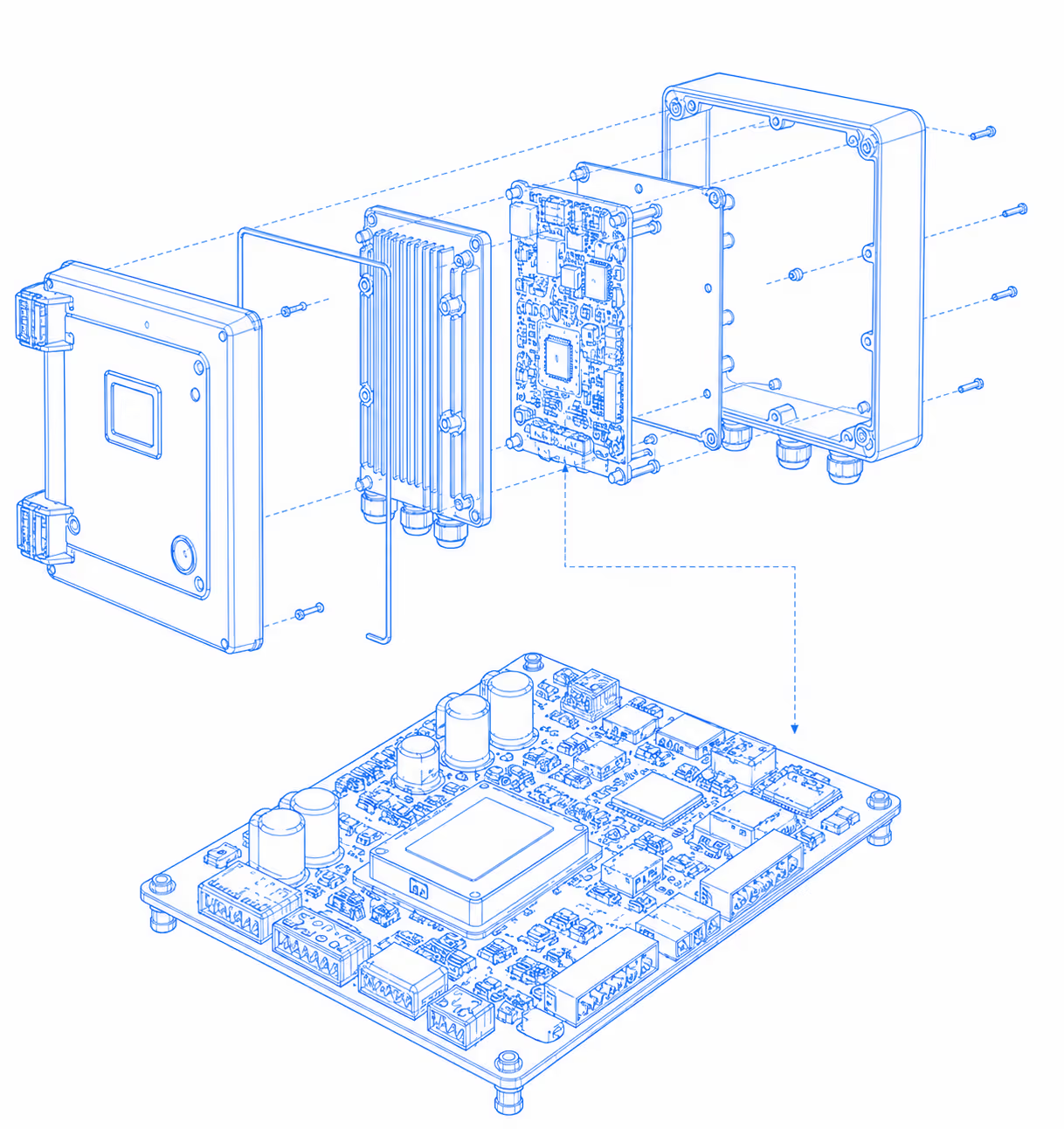
— The context
Every operator of critical systems eventually encounters specific needs: a computer from a defunct supplier, a test bench to qualify a new-generation subsystem, an interface between an existing legacy infrastructure and a new modern installation, or an end-of-life component that needs replacement without altering upstream integration. These requirements demand an engineering firm capable of reverse engineering, design, and production.
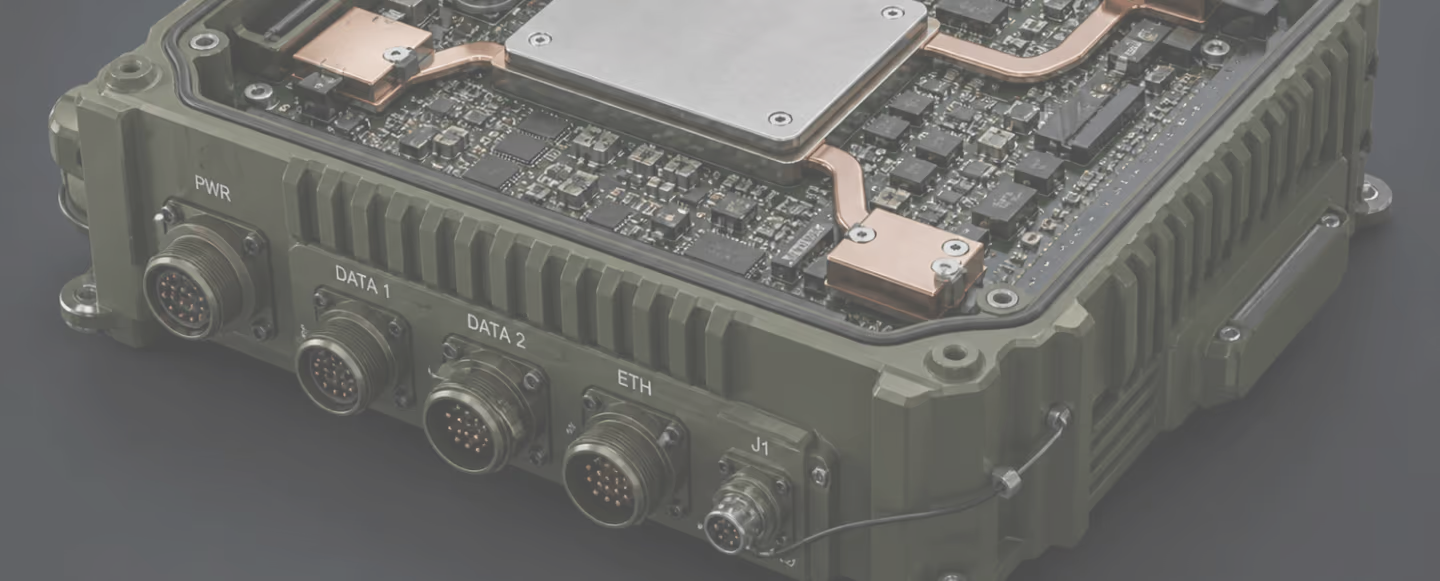
— Milesys 1981
Our Differentiators
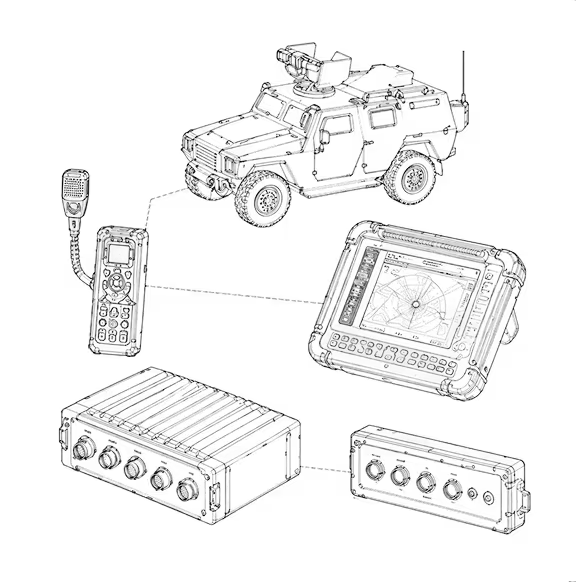
We design, qualify, and produce ruggedized equipment in France for vehicles, ships, and command centers. Our Élancourt design office has been upholding defense standards since 1981.
(A)
45 years
DESIGN OFFICES IN FRANCE · 3 INTEGRATED DESIGN OFFICES
(B)
Multi-sector
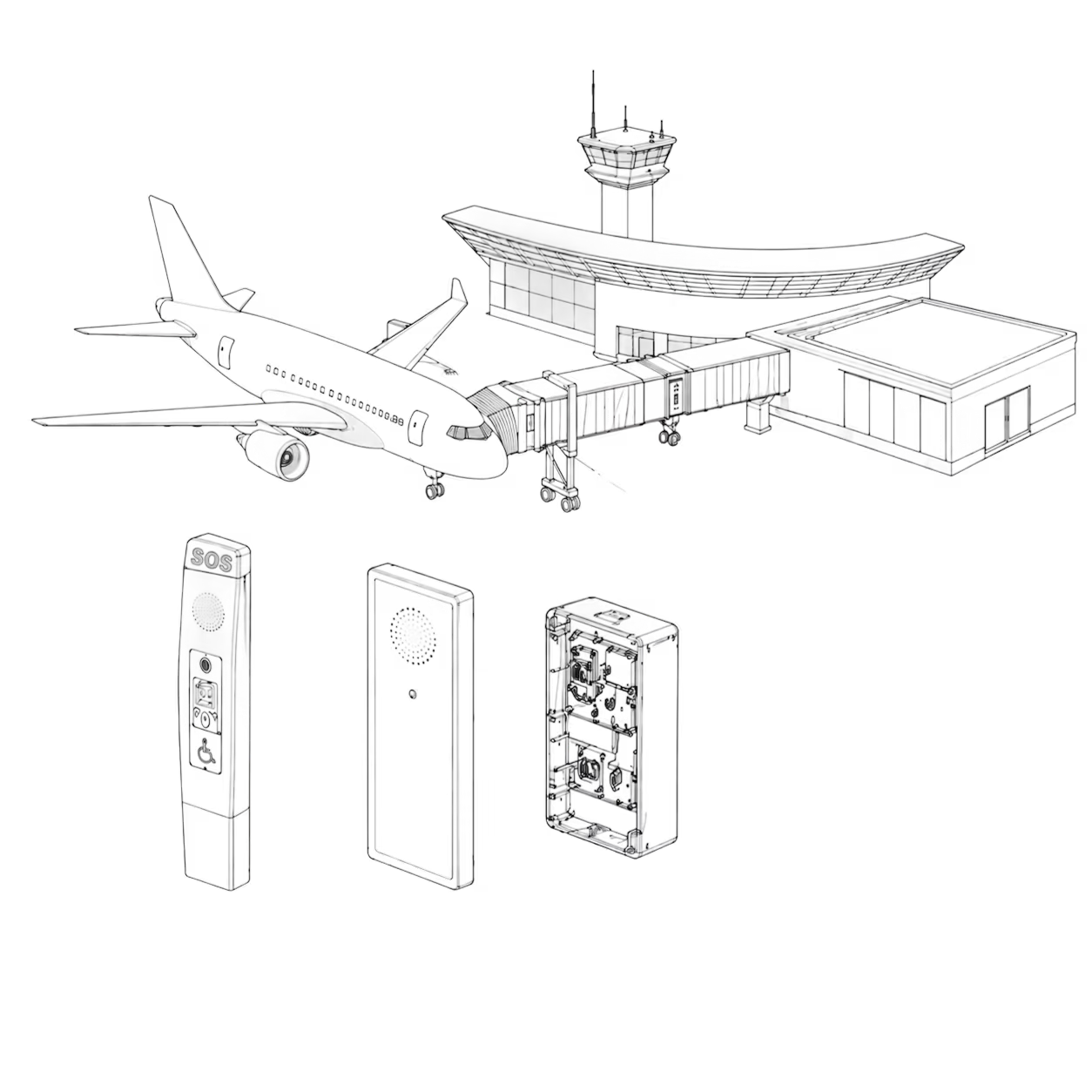
TRANSPORT · AIRPORT · DEFENSE · INDUSTRIAL
(C)
In-Service Support
SUPPORT THROUGHOUT THE PROGRAM DURATION
— catalogue
Our capabilities
01
Electronics
Integrated electronic design for critical equipment. Schematic design, routing, EMC, and environmental qualifications are handled in-house by our electronics engineering department in Élancourt. We use industrial and defense-qualified components according to program requirements.
02
Mechanical
Our mechanical engineering department designs, prototypes, and qualifies mechanical systems for equipment intended for harsh environments: transport, airport, defense, industrial. This includes ruggedized enclosures, thermal integration, and resistance to vibration, shock, and salt spray.
03
Software
Real-time software and embedded firmware developed over long cycles. Architecture, code, automated testing, application qualifications.
04
Obsolescence
Fleet audit, identification of sensitive components, progressive retrofit plan, documented functional replacements. Continuous component monitoring from the design phase, with prioritized sourcing from France and Europe for critical elements.
— catalog
Examples of our work
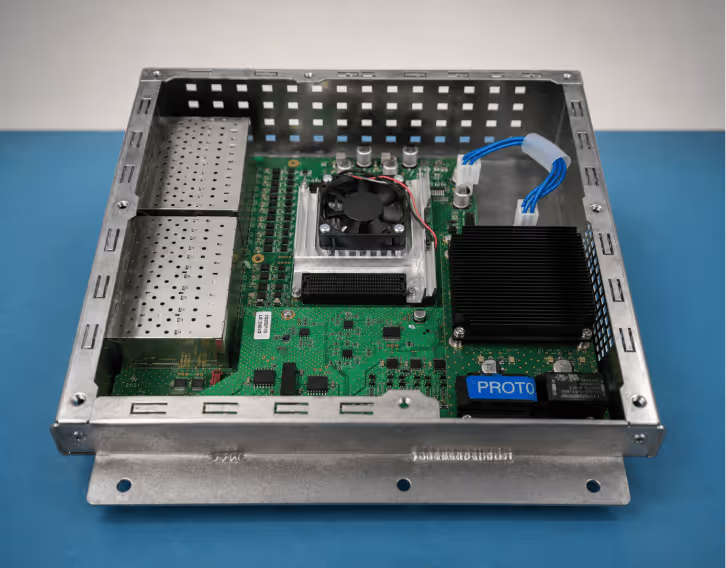
Reverse Engineering
Documentation reconstruction and equipment replication without original plans or vendor support. Functional analysis, schematic capture, identical refabrication.

Legacy Gateway Retrofit
Connect proprietary, analog, or radio infrastructure to a modern IP architecture. SIP, SIP Trunking, TETRA / UHF / VHF / wired-line, GSM-R gateways.
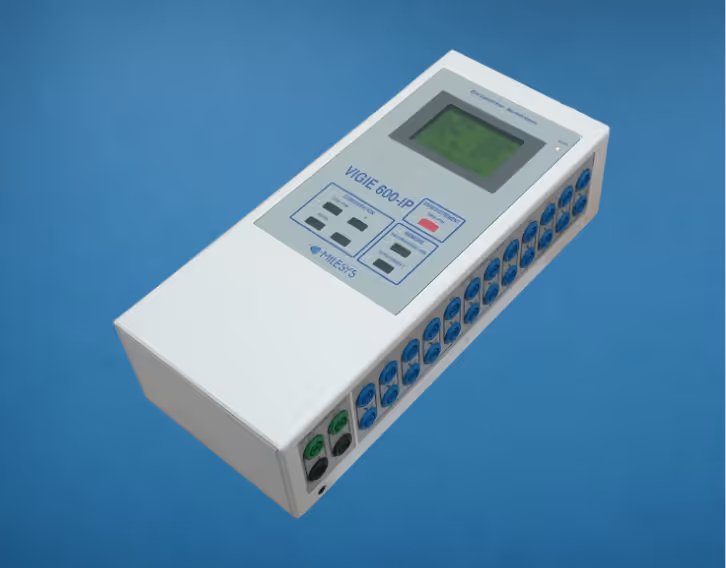
Data Loggers
Data recorders for railway signaling, control centers, urban transit control rooms, defense programs, and industrial applications.
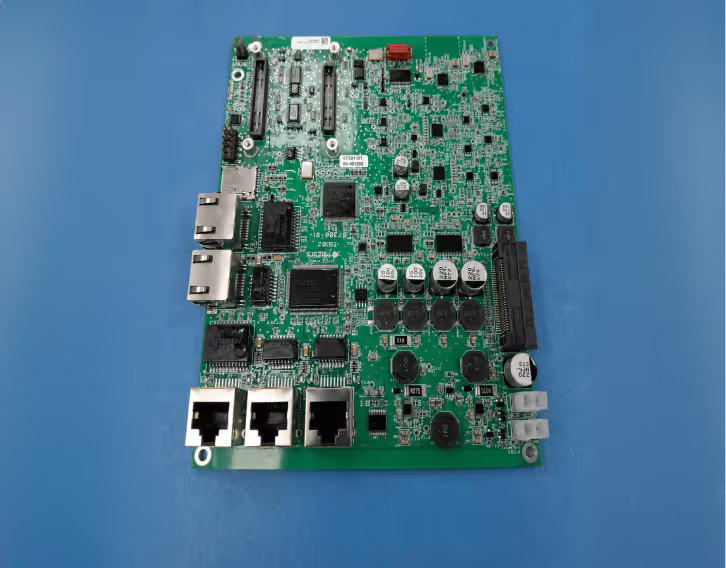
Custom Design
Equipment development to your specifications: electronics, firmware, and mechanics. From proof of concept to production, qualified to your field constraints.
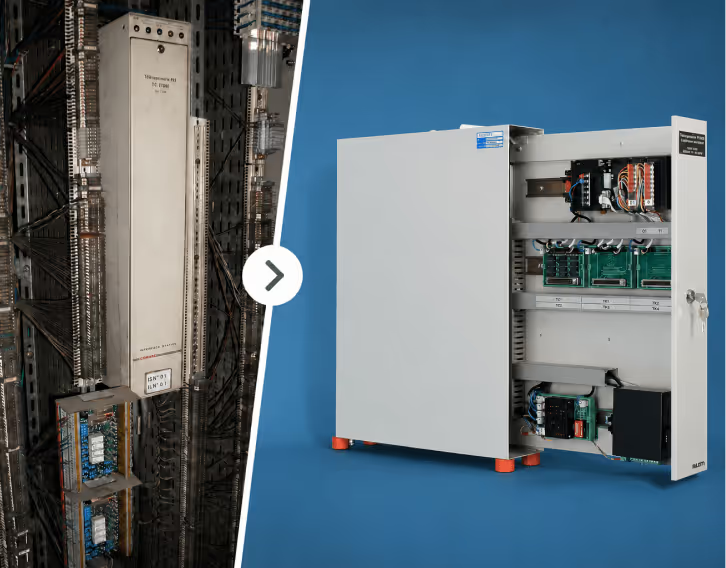
Obsolescence Management
Operational maintenance of long-lifecycle systems. Component monitoring, board redesign, requalification, and strategic stock build-up.
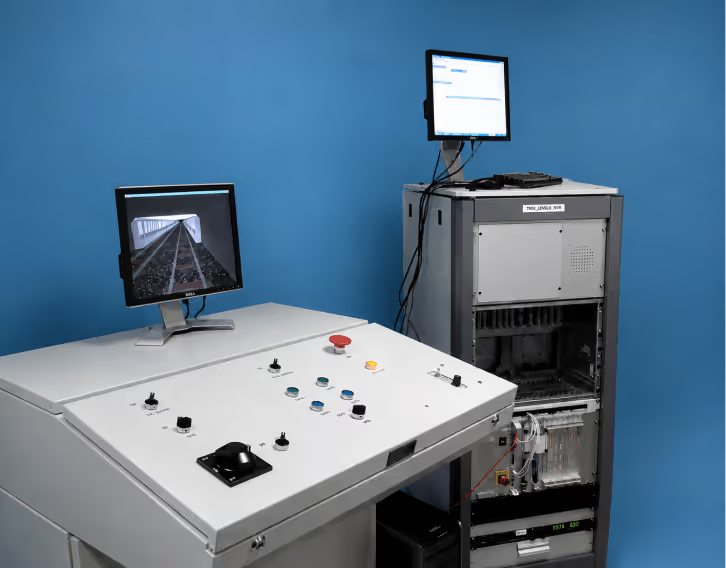
Environment Simulators
Industrial test benches to qualify computers, boards, and subsystems. Automatic train control, railway braking, naval embedded systems.
— Other markets
Tailored solutions for your markets
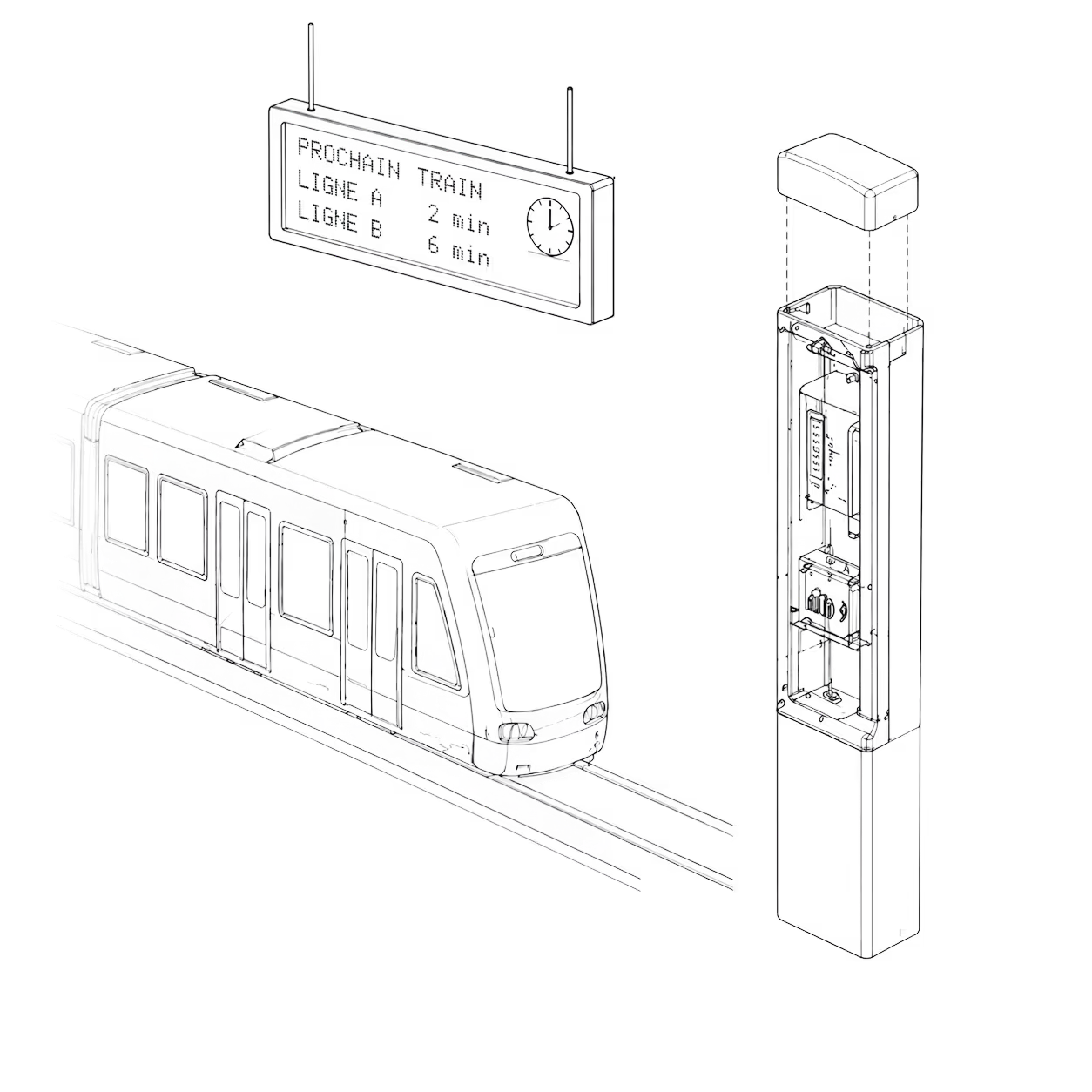
Let's discuss your custom project
Specific design, retrofit, reverse engineering, obsolescence management, simulator. We will contact you within 48 hours for an initial technical discussion, under NDA if necessary.
Or call us at +33 (0)1 30 97 06 60
— Frequently asked questions
Your questions
(*)
Technical scoping with your team (1 to 2 workshops), documented feasibility study, quote, design, qualification, industrialization, then production manufacturing. Each step is milestoned and jointly approved before moving to the next. Performance traceability is maintained throughout the cycle under an ISO 9001:2015 quality system.
(*)
3 to 9 months depending on complexity: 3 months for a gateway on existing infrastructure, 6 to 9 months for a qualified custom design. Precise quoting after technical scoping.
(*)
Standard NDA signed before the first scoping workshop. Client specifications are handled in a controlled environment with named-individual access. No reuse of custom developments for third parties without written agreement.
(*)
Yes. We analyze the existing system, draft the technical specification, then design functionally equivalent and interface-compatible equipment. Standard approach for obsolescence cases where the original vendor is no longer available.
(*)
Off-the-shelf industrial components for non-critical elements. Custom design where it matters: proprietary interfaces, specific qualifications, performance bottlenecks. The trade-off is decided at scoping based on program constraints. Result: controlled costs and timelines.
(*)
We prioritize French and European sourcing for critical components and document the supply chain for each project. Sourcing decisions are made according to program requirements (defense, PRM, railway).
(*)
Long-term lifecycle support contracts, proactive component monitoring, direct access to engineering support, comprehensive documentation, and source code access for embedded firmware when relevant.